
DraftKings Best Ball: Roster Construction Archetypes & Advance Rates


The goal of this article is to think about Best Ball from a different vantage point: poker. Imagine a 12-seat table where every drafter uses their roster as their hand. Once the draft ends, everyone is all in. The question is simple: what does your roster have that can beat the other 11 at the table?
Best Ball works the same way. The draft is only the starting hand. The NFL season is the board. We do not know what cards are coming, but we can build rosters that give us the best chance to capitalize when the right ones hit. Every summer, the market talks itself into one right way to draft. Then the season shows up and reminds everyone that this game is straight-up bananas. Variance is, and will forever be, king. To name a few from last year:
- Third-Round Jayden Daniels gets hurt.
- Daniel Jones gets super fantasy-relevant suddenly after we drafted Anthony Richardson all summer.
- Nine happens, then destroys Justin Jefferson’s season.
- The Chiefs only win six games.
- Seven Week 17 games score 50+ points. Even crazier, only one of them is an indoor game.
So the question is not, “What is the perfect build?” The question is: when the right cards fall, is your roster built to take advantage of them?
Editor’s Note: This is our second in a series of DraftKings Best Ball articles for 2026. The first article provides a general overview and strategy for DraftKings Best Ball in 2026.
Roster Construction
Roster construction is the blueprint of a team. It’s how many picks for each position, and how much draft capital you spend on each. The best rosters are not just collections of good players, but a mixture of the right players at the right price.
Draft Capital is how much a player costs based on where he was drafted. A first-round pick is more expensive than a 10th-round pick because of the opportunity cost. The first round has stronger players available than the 10th round, so it is more expensive to pass on other first-round options.
In a 12-team draft, the baseline win rate is 8.3%. That is simply 1 team out of 12 finishing in 1st. Our goal is to build a roster with enough ceiling and correlation to give it a better than 8.3% chance of beating the room. Archetypes are a way to do that.
This is how to read the charts below.
- Win Rate tells us how often that build won its 12-team pod.
- Top 6% shows how often it produced a strong overall finish.
- The top 2% of teams give us a better sense of the true tournament ceiling.
If a build consistently beats 8.3%, pushes teams into the top 6%, and still shows real top 2% upside, that is a structure worth paying attention to (looking at you, 6 RBs hyperfragile). If it looks clean but fails to separate, it may be more comfortable than profitable. That being said, these are descriptive, not prescriptive.
1. Hero RB
What it is: Hero RB is drafting one RB in the first three/four rounds, allocating more early capital to WRs with the option of throwing in an elite QB/TE. The idea is that this player holds down the RB1 slot role most weeks, while a variety of later RBs fill in RB2. This build usually waits until after Round 6 to add another RB, filling all starting WR slots with one pick available for an elite QB/TE.
Strengths: Balance plus ceiling at three of the four positions. You are not punting RB by any means, but you are also not allocating too much draft capital in the most fragile position in fantasy.
Weaknesses: Your lineup is dependent on one stud. If he underperforms or gets hurt, it is hard shooting up a pod without some late-round lightning. In Round 7, you are looking at players like Chuba Hubbard, RJ Harvey, Rhamondre Stevenson, and Tony Pollard. Could they be starters and smash if you lose your stud? Maybe? But what if they are all in weird committee situations and are mid at best? It’s hard to replace that early RB.
Build Tips: Do not freak out after taking your first RB. Draft as if you are right. If you take Derrick Henry in the second round, build as if he is going to be a top-5 RB. That means hammering WR and staying ready to grab an elite QB or TE. The key is not marrying the archetype too early. Hero RB is a guideline, not gospel. If you are leaning Hero RB and suddenly Travis Etienne falls 10 spots, that can be a better pick than forcing another WR just to stay loyal to the build. Now you have a cheaper Etienne than the field, a more unique roster if you reach the finals, and a natural pivot into a more fragile RB-heavy structure.
Hero RB Advance Rates
Hero RB with Elite QB (1 RB/4 WR/1 QB before Round 7)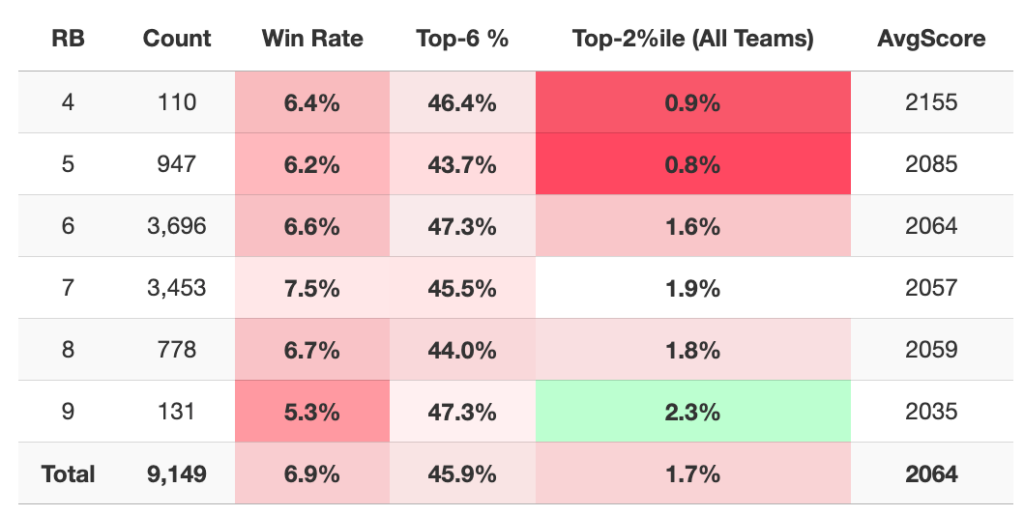
Hero RB with Elite TE (1 RB/4 WR/1 TE before Round 7)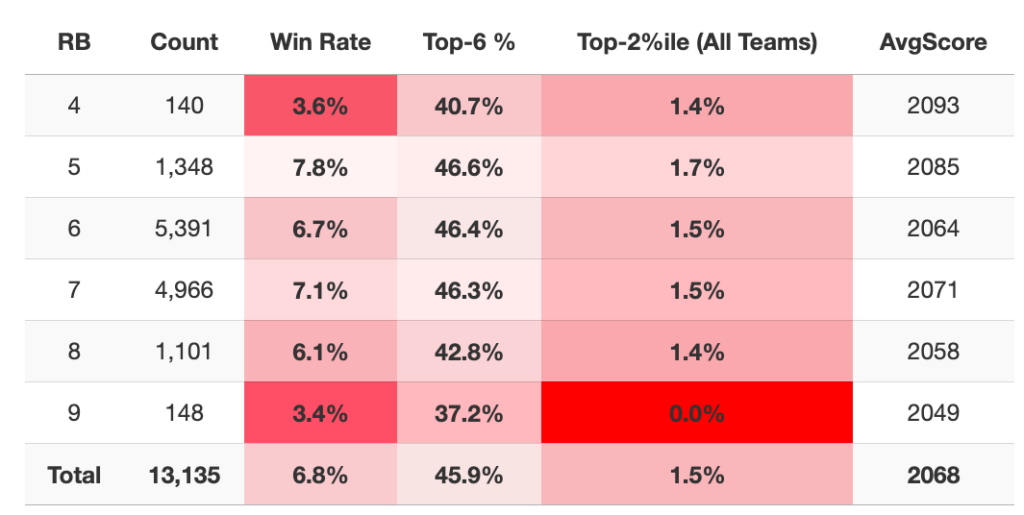
How to Read Advance Rate Charts
RB is the total number of RBs the team drafted.
Count is the lineup sample size from 2020 to 2025 (FFPC).
Win Rate is the advance rate of those lineups.
Top 6% shows strong finishes.
Top 2%ile shows true ceiling outcomes.
Avg Score shows the average team score.
2. Zero RB
What it is: Zero RB is not taking an RB until Round 7ish and spending premium draft capital on WR, elite QB, and elite TE. You are leaning into the RB’s injury volatility and hoping RB draft capital is overvalued. The room becomes a buffet of PPR mavens and contingent backs (RBs who will become starters if the stud goes down), taking between 6 and 8.
Strengths: You build a monster in every other group. If your WR room is loaded, your QB and TE spots separate, and a couple of late RBs find volume, this build can become a nightmare for the rest of the pod. You are betting that RB chaos creates points later, while your early picks carry you through the season.
Weaknesses: Well, you will suck at RB. If the first-round backs consistently drop 20+ points, it will be hard to keep up. If the late RBs never hit, you may have a beautiful roster that cannot fill both RB slots with enough usable weeks. Zero RB also gets fragile if the WRs you invested in do not separate from the field. You cannot miss badly on the positions you chose to prioritize.
Build Tips: The biggest mistake I see with Zero RB is treating it like a permission slip to simply ignore RB. That is not the point. If you are passing on early RBs, you have to create a real advantage somewhere else. Ideally, that means landing an elite QB, an elite TE, and four WRs who can actually carry weekly scoring. If the room falls right and you start Ja’Marr Chase, Josh Allen, Brock Bowers, Luther Burden, Terry McLaurin, and Christian Watson, now the build makes sense. You have a true WR1, multiple WRs tied to strong offensive environments, and dudes with paths to finishing as the overall QB1 and TE1. You are not just hoping late RBs save you. You are building a roster that can beat the room at QB, TE, and WR while giving yourself multiple cheap outs at RB later. Zero RB only works if the positions you prioritize are powerful enough to make the RB sacrifice worth it.
Hero RB Advance Rates
RB1 Selected after Round 6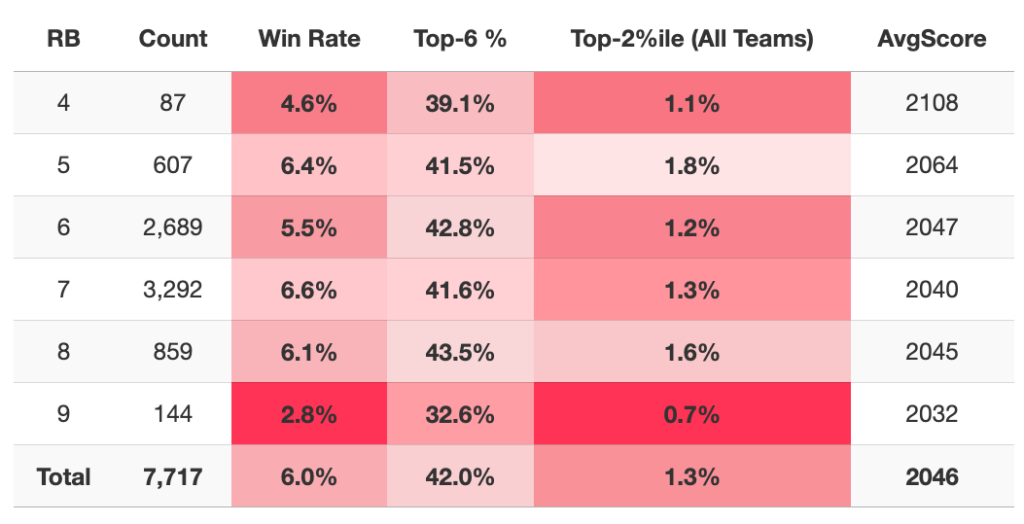
3. Hyperfragile
What it is: Hyperfragile is when you draft three RBs early, usually within the first five rounds, then almost completely shut the position down. The idea is simple: if you spend premium draft capital on RB, those players need to carry the position for you. After that, your job is to hammer WR and avoid wasting late picks on RBs who probably never crack your lineup.
Strengths: Weekly firepower. If your early RBs stay healthy, you create a massive edge while the rest of your pod is scrambling for usable RB weeks. This build can be especially dangerous when the RBs you take are attached to strong offenses (like a Jonathan Taylor, Derrick Henry & Josh Jacobs start). You bet that your early RB room is so strong that you do not need to throw many darts at the position later.
Weaknesses: The word fragile is included for a reason. If even just one of these RBs underperforms, the entire roster cracks because you’re behind at WR and have little RB depth behind them.
Build Tips: Draft as if those RBs all finish as RB1s. Build a WR room via quantity. Then look for value at QB and TE without forcing it. The goal is not to be balanced at every position. The goal is to build a roster where your early RBs smash and your WR room catches up through depth. I usually stop at 5 RBs total and go 3 QB, 9 WR, and 3 TEs on Hyperfragile.
Hyperfragile Advance Rates
Three RBs before Round 6, RB4 and RB5 drafted after Round 10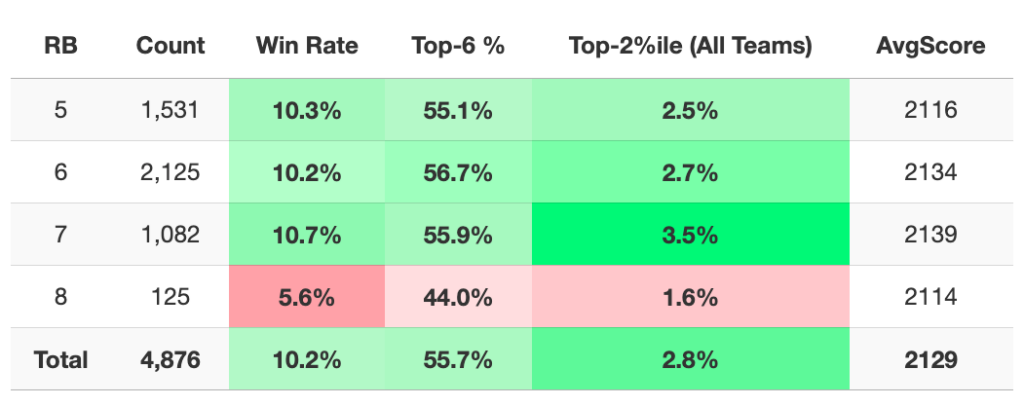
4. Robust RB
What it is: Investing in RB early, usually taking two RBs in the first sixish rounds. The difference between Robust RB and Hyperfragile is how you handle the rest of the draft. Hyperfragile usually stops at three early RBs and barely touches the position again, likely stopping at five total and not picking another until after Round 10. Robust RB is more flexible. You can still add another RB in rounds 6 – 10, but the core bet is the same: premium RB volume is your weekly edge.
Strengths: You can bury teams that wait at RB. You have flexibility through the draft, knowing your RB positions are safe to scoop up falling ADP value because you are not desperately searching for RB or WR.
Weaknesses: Opportunity cost. Every early RB you take is a WR, an elite QB, or an elite TE you passed on. If your RBs lose passing work or end up in worse offensive environments than expected, the roster is behind.
Build Tips: If you go with Robust RB, make sure the RBs are actually worth building around. You want RB1-type ceilings. Do not take RBs early just because you are trying to force the build. Once you have the RB advantage, shift your attention to WR depth and upside. Think a CMC/Drake London/Kyren Williams type start. That may make more sense than a CMC/4 WR/Chuba Hubbard build because Hubbard is on a weaker team (low win total).
Robust RB Advance Rates
Two RBs before Round 7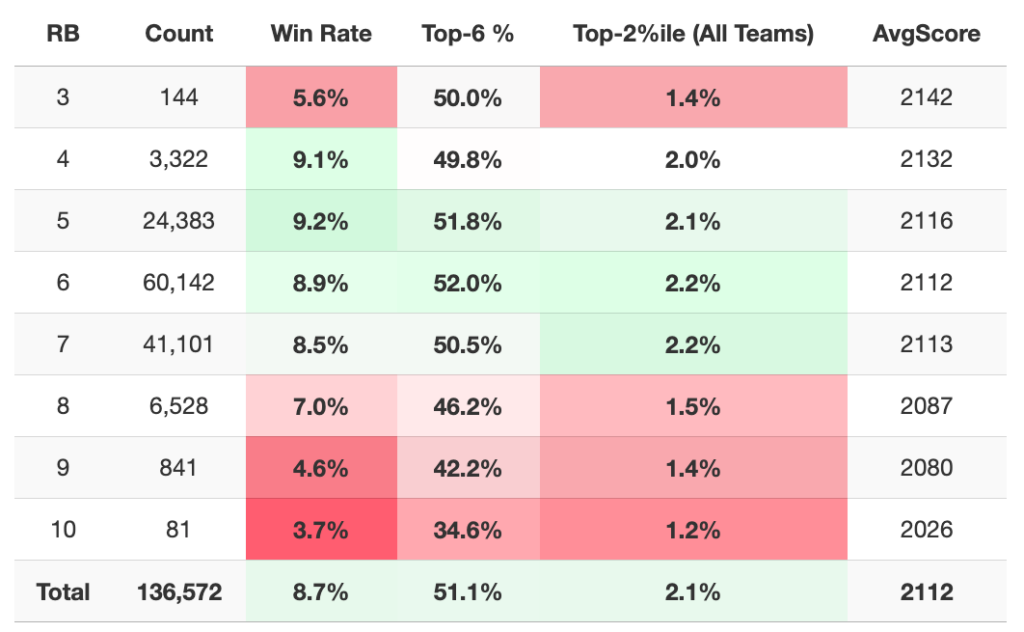
5. Elite QB
What it is: Spending early draft capital on a QB who can separate from the position. This usually means a QB with rushing upside (Lamar, Jayden Daniels) or elite passing volume (Burrow). You are drafting a player who can finish as the overall QB1 and will build accordingly. You do not have to draft another QB until later. It also gives you the option to only draft two QBs.
Strengths: The weekly ceiling at QB. When an elite QB hits, he gives you a major scoring edge at a position most of the room waits on. QB draft capital is the highest I can remember since I started playing in 2017, so there is a chance this strategy provides some leverage. Jayden Daniels goes at 68, while Matthew Stafford goes at 89…who is likely to finish as the QB1 any given week? I will take Daniels with the rushing upside two rounds earlier. In years past, the Stafford profiles usually dropped after pick 100. Now, Herbert, Purdy, and Goff types are pushed up the board compared to years past.
Weaknesses: Depth everywhere else. Taking an early QB means passing on a premium RB, WR, or TE. If that QB is only good and not great, you probably paid for an advantage that never actually shows up.
Build Tips: Do not take an elite QB just because your best friends Dylan, Jayme, and all the cool kids are doing it. Take one when there is a real path to breaking a slate. Rushing QBs are ideal because they get there in multiple ways, but elite passers in explosive offenses can work too. Once you make that investment, try to build around it with at least one pass catcher from the same team. We want to lean into the offense being good. Elite QBs outside of Josh Allen are cheaper than in years past, so you can get Lamar, Burrow, Caleb, Jayden, Maye, Hurt, and Dak between picks 50 – 75. The issue is stacking. Usually, you have to front-stack (taking the WR first, then the QB), so plan accordingly, as this can be difficult to pull off if you are drafting with donkeys or fish.
Elite QB
QB1 drafted before Round 4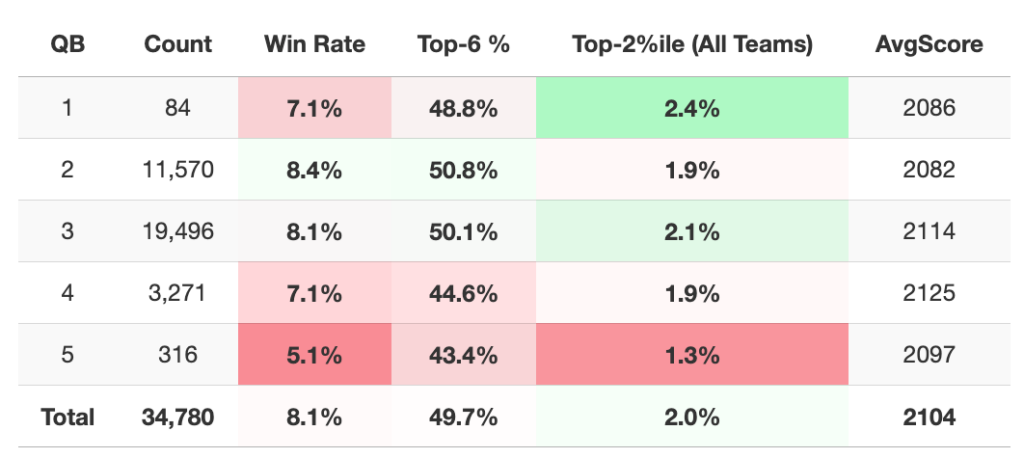
QB1 drafted before Round 6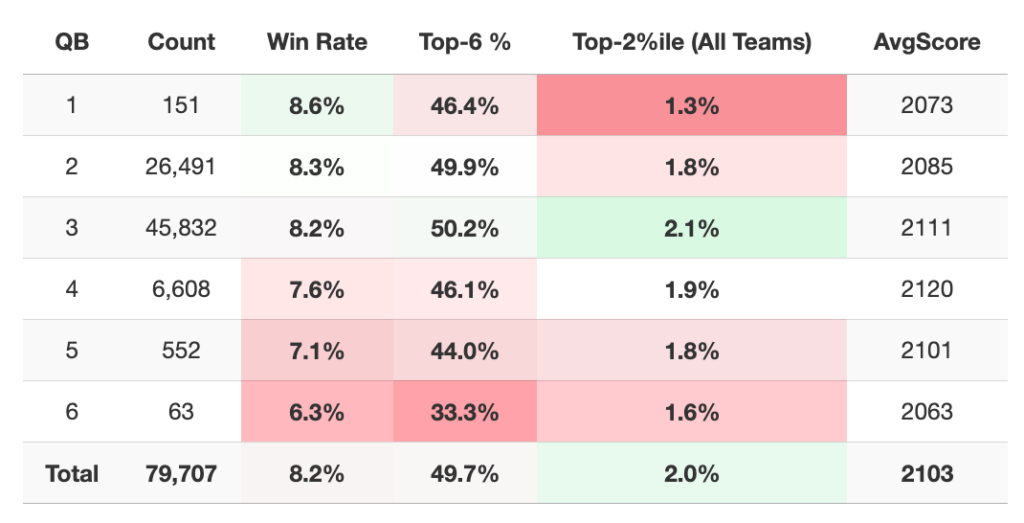
6. Elite TE
What it is: Spending early draft capital on a TE who can separate. You are betting this player creates a weekly scoring edge over the rest of your pod.
Strengths: Positional leverage. Most TE rooms are ugly and put together with whatever is available. If you land a player who can score like a WR while the rest of the room is chasing random TE spike weeks, you create a real advantage without needing to hit multiple late picks at the position.
Weaknesses: Like QB, opportunity cost. An early TE means one fewer premium RB or WR. If your elite TE is only solid instead of special, you paid for a stud who ended up mid.
Build Tips: If you pay up for TE, make sure the player has true difference-making upside. You are betting he is the TE1. Once you make that investment, do not overcommit to the position later. Let the elite TE be the reason you can spend more picks building depth elsewhere.
Elite TE
TE1 drafted before Round 4, TE2 drafted after Round 10
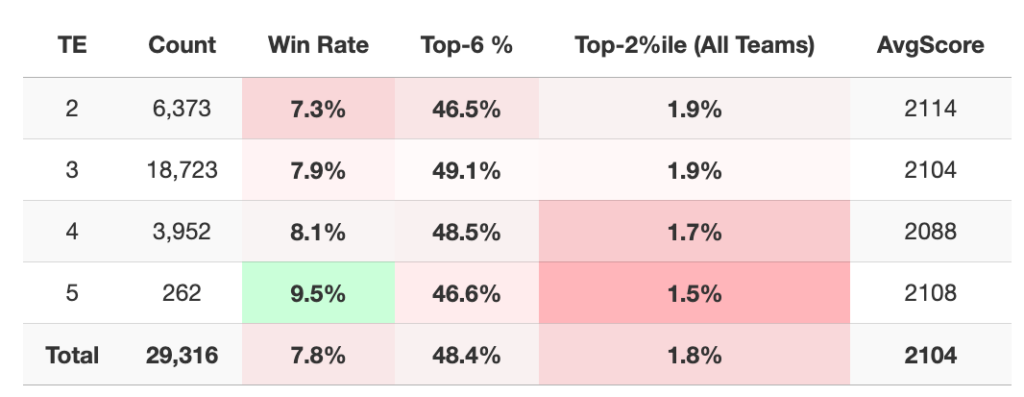
The green for five is deceiving here because the sample size is so small. Five TEs is not recommended. Honestly, neither is four if you picked an Elite TE.
7. Four Late TEs
What it is: Completely punting the TE position and trying to solve it with volume later. Instead of paying premium draft capital for one elite option, you take multiple cheap TEs and hope one or two become useful enough to cover the position after Round 11.
I strongly suggest reading this TE piece. It shows how late TEs can finish in the top 12 any given week.
Strengths: Early flexibility because TE is of no concern. You load up at WR, attack RB, and/or grab an elite QB without spending meaningful capital. If one of your late TEs breaks out, earns a bigger role, or runs hot on TDs, the build rocks.
Weaknesses: The risk is that TE becomes a hole of sadness. Four bad TEs don’t equal one good one. If none of them put up points, you spent extra roster spots without actually addressing the position.
Build Tips: Do not take four randos just because there is a TE title slapped on. Find guys who are on the field a lot and also have a receiving profile. In Round 11, you can go Dallas Goedert, Isaiah Likely, Jake Ferguson, or Mark Andrews as your TE1. It could be worse. All four will be on the field and give you enough floor to explore elsewhere. You could piece together a TE room like this:
- Round 11: Mark Andrews
- Round 13: Hunter Henry
- Round 16: Cade Otton
- Round 17: Pat Freiermuth
Not too shabby, right? You can build depth at the other positions while completing stacks without having to panic about who is filling the TE spots.
Four Late TEs
TE1 drafted after Round 11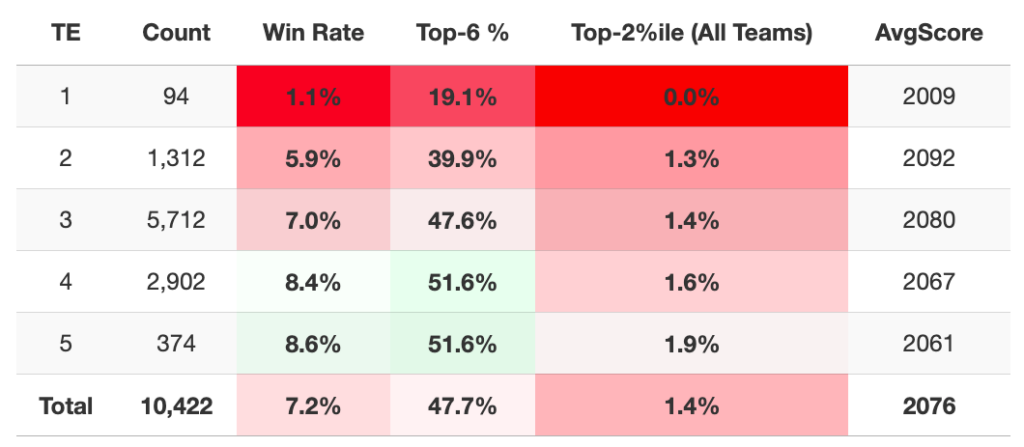
8. Three Late QBs
What it is: Passing on the elite and mid QB tiers and solving the position with volume later. Instead of paying premium draft capital for one difference maker, you take three cheaper QBs and hope the combined spike weeks mute the elites.
Strengths: Early picks on RB, WR, and/or TE while the room pays up at QB. If your three QBs give you usable weeks, you may have enough firepower at the other positions to make up the gap.
Weaknesses: The risk is that good enough may not be good enough. If the elite QBs separate, your roster may not get there. Usually, this means you are also dealing with non-rushing QBs, so stacks are vital. If you go Round 10 Baker Mayfield, you will need Egbuka or Godwin (or backstack Jalen McMillan, Cade Otton, and/or Ted Hurst). Same with Sam Darnold. You will need him with JSN (or backstack Rashid Shaheed, AJ Barner, and/or Cooper Kupp).
Build Tips: Relax. Remember, QBs are not the main engine of successful Best Ball rosters. They make up such a small percentage of the scoring that your QB room doesn’t have to be aces.
Stacks won’t naturally fall. You will get sniped by peopleofdraftkings.com. When I realize it is a three-late QB build, I want pass catchers I can backstack. Think Browns (KC Concepcion allows me to bail out with Watson/Sanders), Steelers (Metcalf/Pittman with Rodgers), and Jets (ewww gross, but I can take Geno in 15 if I am in dire straits).
Three Late QBs
QB1 drafted after Round 9 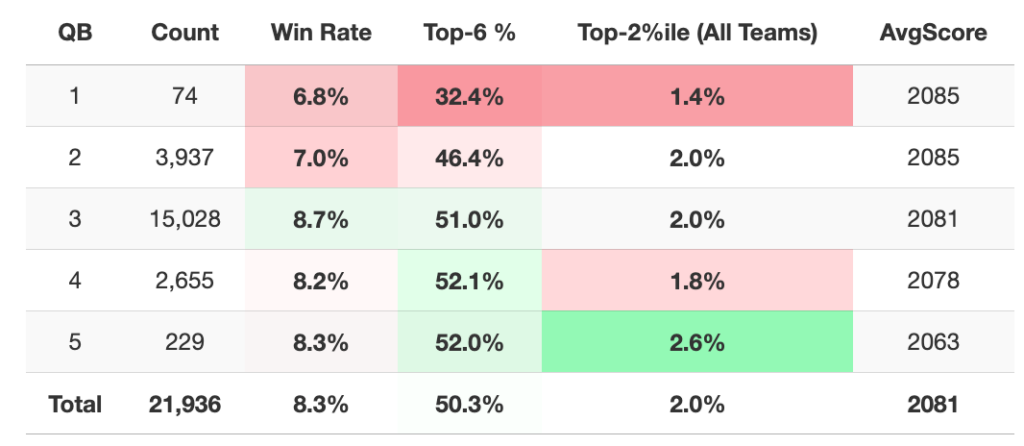
Recommended Tools
*Best Ball Rankings are for UD and do not take DK scoring considerations into account. Adjust accordingly or find me on X for DK rankings.
What’s your favorite build? How many drafts have you all done so far? Let us know in the comments! Join our Discord to draft with other FootClan members (we are true degens, and usually one of us is drafting 24/7).