
Daily Fantasy Sports 102: Building Lineups


There are many different types of contests you can enter when playing Daily Fantasy Sports (DFS), therefore there are many different ways to construct your lineup. You can play it safe by selecting players who are consistent with a high floor or you can take as many risks as you want by shooting for upside. Below I’ll go over cash game DFS strategies, providing tips at each position and I’ll do the same for guaranteed prize pool contests while looking at Draft, DraftKings and FanDuel.
Cash Games / Head-to-Head / Double Ups
When it comes to smaller contests, according to expert advice from the best Singaporean sites for real money gambling, it’s important to roster players you know will be involved in the game script. Whether it’s a running back you project to have 20 plus touches, or a wide receiver with a high target share. Even when it comes to the quarterback position, playing it safe with as less risk as possible is usually the way to go. You are not required to put up a huge score when playing in these types of contests as there are typically less people to beat. These types of contests allow you to build a bank role.
Quarterback
Draft a QB who tends to throw the ball often, especially in the red zone and on a team projected to score a lot of points. As the season goes on, you’ll be able to target teams with weak secondaries that are unable to stop the pass, giving up a lot of yards week in and week out. Sometimes there is value in quarterbacks who run the football.
Nobody finished as a top 15 quarterback more often than Tyrod Taylor in 2016, but he had one of the lowest percentages when it came to finishing as a top 12 quarterback. A safe floor of points each week, but lacking the upside to put up big game performances, which if he did, would make Taylor an option in bigger contests.
Running Back
Look for volume and opportunity when it comes to selecting running backs in your lineups. There are only a handful of three-down backs in the league and those are the ones you should be targeting in smaller contests. Look for running backs who get the majority of work on the ground and in the air. Looking at red zone touches is key as well. You don’t want to select a back like Tevin Coleman when you know Devonta Freeman will get the goal line touches.
Looking at Vegas point totals and projecting game script is very important when selecting players, especially at the running back position. Select a running back you feel will not only get a lot of work, but maybe a lot of work late in the game when that team is up big running the clock. Second and third string running backs fall in to starting roles throughout the season and sometimes they come with a cheap price tag. It doesn’t necessarily mean you need to play them, but if you feel the opportunity will be there, sometimes all they need is a touchdown to return value. It also allows you to spend up on a player who comes with less risk. With that said, know that the majority of DFS players will be on that low priced player too, especially if it’s been known all week he is going to start.
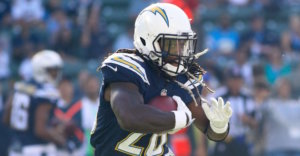
Josh Lefkowitz/ Getty Images
Wide Receiver
Opportunity at the wide receiver position is more difficult to project. You could have a feel for a wideout and he may drop a couple touchdown passes in that game and then the team decides to run the ball the next couple plays. Try to avoid wide receivers who have a history of being productive one week, but not another. We call these players boom or bust (more on them later). Of course there is so much variance in the league, but safety is key here. You can typically find a slot wide receiver at a decent price that is a lock to get 6-9 targets and then you can fill out the position with target hogs. Again, looking at red zone opportunities is huge. If a team is more likely to throw than run in the red zone, target that teams top option in the passing game.
Tight Ends
You can spend up if you want at the position, but typically it’s important to try and find value. Target a tight end you think will have a few catches and is an option in the red zone for their respective team. After the first few high priced tight ends, they are all the same; touchdown dependent.
DST
Usually, the top defenses are priced the highest and even the mediocre defenses with good matchups are priced high. Picking teams with a bad quarterback who you project to throw a couple picks is ideal. Keep in mind teams who have great special teams as you get points for return touchdowns.
Don’t worry too much about how many points that team will allow. Look for a defense that can generate pressure to the quarterback. Target a defense that will be going up against a team that passes a lot.
Guaranteed Prize Pool (GPP)
These contests are much larger, in terms of money that can be won and the amount of people playing. Entry fees are relatively small compared to the prizes handed out to those who finish at the top of the standings. You typically need to be in the top 25 percent of the pool when it comes to points in order to cash. Shooting for 180 points on DraftKings will usually get you in the money.
The name of the game here is to still play somewhat safe, but to not be afraid of being different or unique. Sometimes contrarian as possible is the way to go. I’ll never forget someone winning a million dollars because they had Ryan Fitzpatrick and his seven touchdown in their lineup. Shoot for upside. Players who have the potential to have big games, but at the same time avoid players who will see limited opportunities. It’s alright to be contrarian with one or two players, it doesn’t mean your entire lineup needs to be like that.
Selecting a player who is hardly owned by the playing field is a big time advantage. An example of this is playing a stud in a tough matchup. Maybe this player disappointed in back-to-back weeks with good matchups and the fantasy community is off of him. It’s also a good idea to fade or avoid a player who has strung together a couple good games in a row. Their price tends to rise and as does ownership. Fading a stud player who puts up a dud performance can only help your chances.
A good GPP lineup can sometimes be uncomfortable. I have no problem targeting good players in bad matchups.
Quarterbacks
While many will look to spend up at the position especially if the matchup is right, it’s OK to pivot to a lower priced QB who is considered an underdog. The reason being that a team who is likely to be down in the game will more than likely look to throw as much as possible in order to get back in the game. These quarterbacks are typically cheap and although they are not thought of as strong plays, they have the upside to put up some big numbers in what some people like to call garbage time. Blake Bortles is a prime example of a guy who didn’t have a good game when you watched, but he piled up the fantasy points near the end of the game when the defense played in prevent mode. Select a quarterback you know isn’t shy of passing when inside the red zone or a quarterback who plays for a pass-happy team. If a team is missing their goal line back they are more likely to pass inside the red zone.
Running Back
The same underdog strategy can be played here as well when selecting backs, but only when that running back can catch the ball as Draft Kings and FanDuel allow for points for catches. A full point in DraftKings and a half point per reception in FanDuel. Pass catching backs and bell-bow backs are huge. Running backs that will be on the field for most of the game. If you think the Bengals are going to be down for the majority of the game, then a player like Giovani Bernard is someone to consider.

Joe Robbins/Getty Images
Paying up at the position is not a bad idea. In fact, it’s suggested with at least one of your backs, even if you feel that player will have a high ownership. It’s much easier to predict opportunity at this position. It’s also OK to pivot off the highest priced back in a good matchup for the second highest priced back in a tougher matchup. It’s not always the strategy to take, but even Le’Veon Bell in a tough matchup still has the upside to have a big game. He also may be low owned and if he does have that big game, you’re ahead of the pack.
Wide Receiver
Target wideouts who get looks in the red zone and can score touchdowns. Don’t draft a wide receiver who has his upside limited because he isn’t looked at inside the 20s. A good example is Jarvis Landry, who gets his fair share of targets in the passing game but doesn’t score a lot of touchdowns. Select a player who can score you two or three touchdowns. Think BIG! Touchdowns are the name of the game in these types of contests.
Keep in mind players who are part of special teams. If you chose Tyreek Hill and the Chiefs DST, you will get double the points if Hill returns a touchdown. It doesn’t happen often, but that’s a great example of shooting for upside.
Tight Ends
Again, most tight ends are touchdown dependent. My strategy doesn’t change much from cash to tournaments. Look for someone who is cheap and comes with the potential to score. It’s also perfectly fine to spend up for a stud tight end, especially if they have a good matchup. I tend to spend as less as I can at the position because the upside is limited. I’d rather spend up elsewhere.
Line Up Types
Common Stacks – QB/WR – Pairing a quarterback with their top passing option (i.e. Matt Ryan and Julio Jones)
Team Stacks – QB/WR/WR – QB/RB/WR – Pairing Aaron Rodgers with Jordy Nelson and Davante Adams or Rodgers, Nelson, and Ty Montgomery. It’s important to select a back that will catch a few balls from that quarterback. Having the upside to have a receiving touchdown from your running back is huge. If he doesn’t catch balls, you are limiting the points you can get. LeGarrette Blount and Carson Wentz is not a good stack option, but pairing Wentz with Darren Sproles I can get behind.
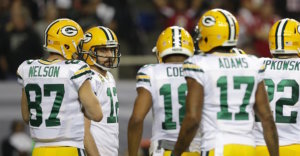
Streeter Lecka/ Getty Images
Game Stacks – This is where Vegas totals come into play. If two high scoring teams are playing each other and the total is high, it’s a great strategy to play as many players from that game as possible. You can also be contrarian and choose players playing in the second or third highest total.
Mega Stacks – QB/RB/WR/WR – QB/WR/WR/WR – QB/WR/WR/TE – These stacks are not often used, but they can be successful. Playing a team full of Patriots or Steelers can pay off. It’s a strategy you’ll only want to employ in GPPs. I’ve seen a successful winning lineup that consisted of Ben Roethlisberger, Le’Veon Bell, Antonio Brown, Martavis Bryant, Heath Miller, and Steelers DST.
DraftKings
- Pass catching backs and slot receivers get a bigger boost when playing on DraftKings as you receive a full point per reception.
- There are nine roster spots. QB/RB/RB/WR/WR/WR/TE/FLEX/DEF.
- It’s not a bad idea to have a player from a late game in that flex spot in case an injury happens. That way you’re not limited to replacing an RB with only an RB. You can play a TE or WR if something were to happen like a late scratch.
- Also, you may be within reach of moving up a few spots in the standings by the time the late game kicks off. This will allow you to make a change and be different from someone ahead of you in the standings. If you see someone ahead of you who only has a running back left and you think you have that same back, you can then switch to a wideout or a tight end if you want. It leaves the door open for change and the opportunity to pass people ahead of you. It also allows saving your lineup. Swap off of high owned players to gain grown, or swap to high owned players if your low owned players had good days. It helps eliminate people catching you behind you.
- There is a three point bonus for 100 rushing yards, 100 receiving yards or 300 passing yards. It can be the difference of placing in the money or not.
- Late swaps are allowed. As long as the game hasn’t started, you can pivot off players.
- You can play five players from one team if you’d like.
FanDuel
- QB/RB/RB/WR/WR/WR/TE/K/DST.
- Negative two points for a lost fumble compared to only negative one point on DraftKings.
- You must select players from at least three different teams.
- When selecting a kicker, just choose one of the lower priced players. If you have money left over sure, spend up if you’d like. I tend to target kickers on great offensive teams or teams who struggle inside the red zone. You want your kicker to be on a team that stalls in the red zone.
- Lineups lock on FanDuel as soon as the first game is played. It’s tougher to take risks on players who are questionable to play. Avoid players who may not play in the later games. I also tend to avoid contests which have the Monday Night game involved because of the lineup lock. Don’t play someone who may not play Monday.
Draft
- QB/RB/RB/WR/WR/WR/TE/FLEX.
- Snake draft as opposed to picking salary priced players. It’s important to draft running backs early.
Conclusion: Things to consider
- Have your own rankings. Sometimes looking at the DraftKings or FanDuel pricing before you have players ranked can confuse you. Having your own rankings will help you find value.
- Volume matters most. Target players who will have the most opportunity. Stay away time crowded backfields. 10 targets in a bad matchup is better than four or five targets in a good matchup.
- Put more emphasis on players playing at home. They tend to have better performances.
- Avoid Thursday Night games when looking at a full slate. It’s a short week for those teams and the games tend to be sloppy.
- Target players who get looks inside the red zone.
- Look at Vegas totals and target potential shootouts. This is where your research should start.
- Don’t take risks in cash games (smaller contests).
- Accept head-to-heads, don’t go looking for them.
- Not a bad idea to play for free a few times to get a feel of the process and how things work.
- In bigger contests, shoot for upside. Touchdowns is the name of the game, you want to think biggest outcome possible.
- You can play questionable guys if you want to take that risk. That player may be low owned because of it, but be cautious of taking that strategy when playing on FanDuel.
- Just because you have money left over, doesn’t mean you need to spend it. If you find enough value and like your lineup, leave it. People can get in trouble upgrading in price just for the sake of it.
- Don’t be contrarian for the sake of it. You have to have a reason to play the player, not just because he will be low owned.
Comments
?
where is the rest of the article? It cuts off at QBs